Sports
Ann Arbor's Synchronized Skating Legacy Gets an Olympic Stage in 2030
By Staff · July 21, 2026
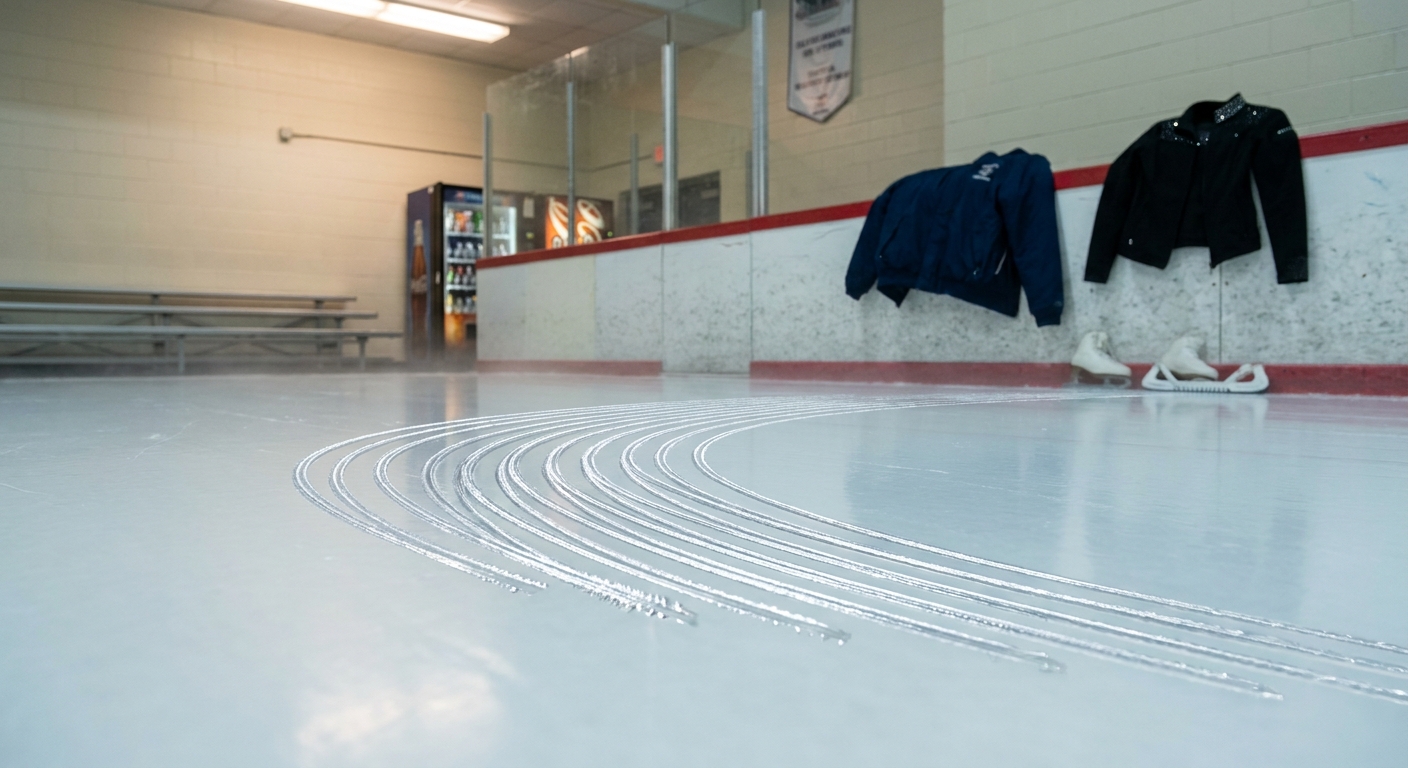
Ann Arbor gave synchronized skating its start in 1956. Now, nearly 75 years later, the sport is headed to the Olympic stage.
The International Olympic Committee Executive Board approved Synchro9, a nine-skater synchronized figure skating discipline, for the 2030 Winter Olympics in the French Alps on July 7.
For Ann Arbor, the decision is a long-awaited validation — and a test. Local rinks, coaches and families sustained synchronized skating for decades before it carried Olympic standing. Now the question is whether new attention, money and opportunity will reach the grassroots programs that built the sport, or chiefly strengthen elite national-team pathways.
Synchronized skating began in Ann Arbor in 1956, when Dr. Richard Porter, a University of Michigan professor of protozoology, started the world's first synchronized skating team, the Hockettes, after watching teenage girls from the Ann Arbor Figure Skating Club put steps together on the ice. The Hockettes first performed between periods at University of Michigan hockey games and in Ann Arbor Figure Skating Club ice shows.
The original Hockettes had about 24 girls. They practiced roughly an hour a week in their first season, taking whatever ice time they could find. Porter coached the team for 21 years and was honored at the 1993 U.S. Precision Skating Championships in Detroit.
The sport grew from those modest beginnings. The first U.S. Synchronized Skating Championships — then called the U.S. Precision Championships — were held in Bowling Green, Ohio, in 1984. The first ISU World Synchronized Skating Championships followed in 2000. Ann Arbor still marks that history each year with the Dr. Porter Classic, a competition honoring Porter and the sport's 1956 founding in the city.
That lineage remains visible in the local skating pipeline. For the 2026-27 season, the Ann Arbor Figure Skating Club offers LTS Synchro, or Learn to Skate; Aspire Synchro; Advanced Synchro, including Preliminary, Pre-Juvenile and Junior competitive teams; and Adult Synchro.
Pam May, On-Ice Director for the Ann Arbor Figure Skating Club and Hockettes Director, began the 2025-26 season bringing veteran coaching experience to the program. The Hockettes Junior team won bronze at the January 2026 Spring Cup in Italy with a season-high score of 184.64 points and also qualified for the 2026 U.S. Synchronized Skating Championships. The Hockettes are recruiting for 2026-27, with new teams beginning this summer and tryouts still open.
The University of Michigan Figure Skating Club is another piece of that local system. Founded in 1992, when Jack Vivian was director of Yost Arena, the club's synchronized skating teams practice at Yost Ice Arena. They receive priority ice time as a Club Varsity sport that performs during University of Michigan Men's Hockey games.
But getting into the sport — and staying in it — can be costly. Seasonal synchronized-skating dues range from $900 to more than $4,000 per skater, depending on the region and level of competition. The University of Michigan synchronized skating team charges $480 a month for eight months, or $3,840 annually, for Collegiate skaters, and $235 a month for eight months, or $1,880 annually, for Open Collegiate skaters. Those dues cover ice time, coaching, transportation, competition fees, hotels and dresses. Families can still face separate expenses: costumes starting at $175, plus travel, competition fees and team jackets that can add hundreds or thousands of dollars each year.
Ice time is the largest cost. Private freestyle sessions typically run $20 to $40 for 50 minutes. Team blocks can range from $8.50 to $15 per 30 minutes at lower-cost rinks to $300 an hour for premium rental time. At the Ann Arbor Figure Skating Club, families must buy a $170 family membership or a $135 introductory membership before purchasing summer ice sessions. Adult sessions cost $9.50 each. Yost Ice Arena is generally open from early October through late April and has no public ice availability in the summer.
Many synchronized skating coaches volunteer their time. Paid coaches can earn from nothing to $30,000 annually, with a national average of $4,391 per team. Regional coaching rates average $49 an hour in the South Atlantic, $60.50 in the Northeast and $72 on the West Coast. Teams often turn to fundraising to help pay for travel and equipment. The University of Michigan team offers dues waivers of about $1,000 for Collegiate members and $500 for Open Collegiate members.
Olympic status could change those economics, but it will not automatically change them at the club level.
The IOC directs 90% of Olympic Games revenue back into sport development, including funding distributed through Olympic Solidarity to National Olympic Committees for athlete and coach support. Olympic standing can also make a sport more appealing to sponsors drawn to the visibility and prestige of the Games. Olympic Games can leave facility legacies, including new or renovated venues that lower barriers for grassroots athletes — yet even within Olympic sports, funding can favor the most popular or successful programs, leaving less prominent disciplines with fewer subsidies.
In the United States, the United States Olympic & Paralympic Committee funds National Governing Bodies and grassroots development primarily through private revenue from broadcast rights, sponsorships and philanthropy, using performance-based grants and high-performance contracts. The USOPC receives no direct government funding for Olympic programs. Its support is deliberately uneven: National Governing Bodies receive between 6% and 85% of their total budgets from the USOPC. The USOPC invested $234 million in athlete-excellence programs in 2024, largely through increased grants to athletes and National Governing Bodies.
U.S. Figure Skating already offers synchronized-skating support through grants for teams in its Envelope A through C high-performance tiers and through a dedicated Synchronized Skating Athlete Support Fund. Teams selected to Envelope A, B or C receive training and travel grants tied to their assigned tier. Member clubs can separately pursue Community Development Grants, which are not tied to team performance. U.S. Figure Skating awards six $2,000 Community Development Grants each year — $12,000 total — to eligible member clubs, Learn to Skate USA programs and Aspire programs, with awards based on a club's community-development plan.
The current system rewards high-performance results and revenue generation far more than it guarantees affordable ice, paid coaching or lower family costs at the clubs that feed the elite pipeline.
Pam May, On-Ice Director for the Ann Arbor Figure Skating Club and Hockettes Director, called the Olympic announcement a moment of possibility for that pipeline. Pam May said she was "overjoyed and excited" by the decision. May also called it a "historic milestone."
The Ann Arbor Figure Skating Club held auditions for a Hockettes Synchro9 team from July 13 through July 29, noting that synchronized skating had been selected for the 2030 Winter Olympic Games. Pam May, On-Ice Director for the Ann Arbor Figure Skating Club and Hockettes Director, said her goal is to "build the local program so the team can eventually become a World team." Pam May, On-Ice Director for the Ann Arbor Figure Skating Club and Hockettes Director, described her work as "trying to build up synchronized skating in the area."
Synchro9 will first be contested at the 2028 Winter Youth Olympic Games in Dolomiti Valtellina, then make its Olympic debut at the 2030 French Alps Games. The event uses nine skaters and one official alternate, rather than traditional 16-skater lineups, featuring faster formations and shorter routines in head-to-head knockout rounds instead of a single cumulative program. Adding the women's event also helps bring overall athlete counts to gender parity at what is designated as the first gender-equal Winter Olympics.
For Ann Arbor, the next four years will reveal whether Olympic recognition translates into meaningful support for the rinks, coaches and families who have sustained synchronized skating since 1956 — or whether the spotlight and money flow to elite national programs, leaving the grassroots clubs that built the discipline still waiting.