Government
What's on Ann Arbor City Council's Agenda? A Mid-Summer Check-In on Key Votes and Committee Activity
By Staff · July 17, 2026
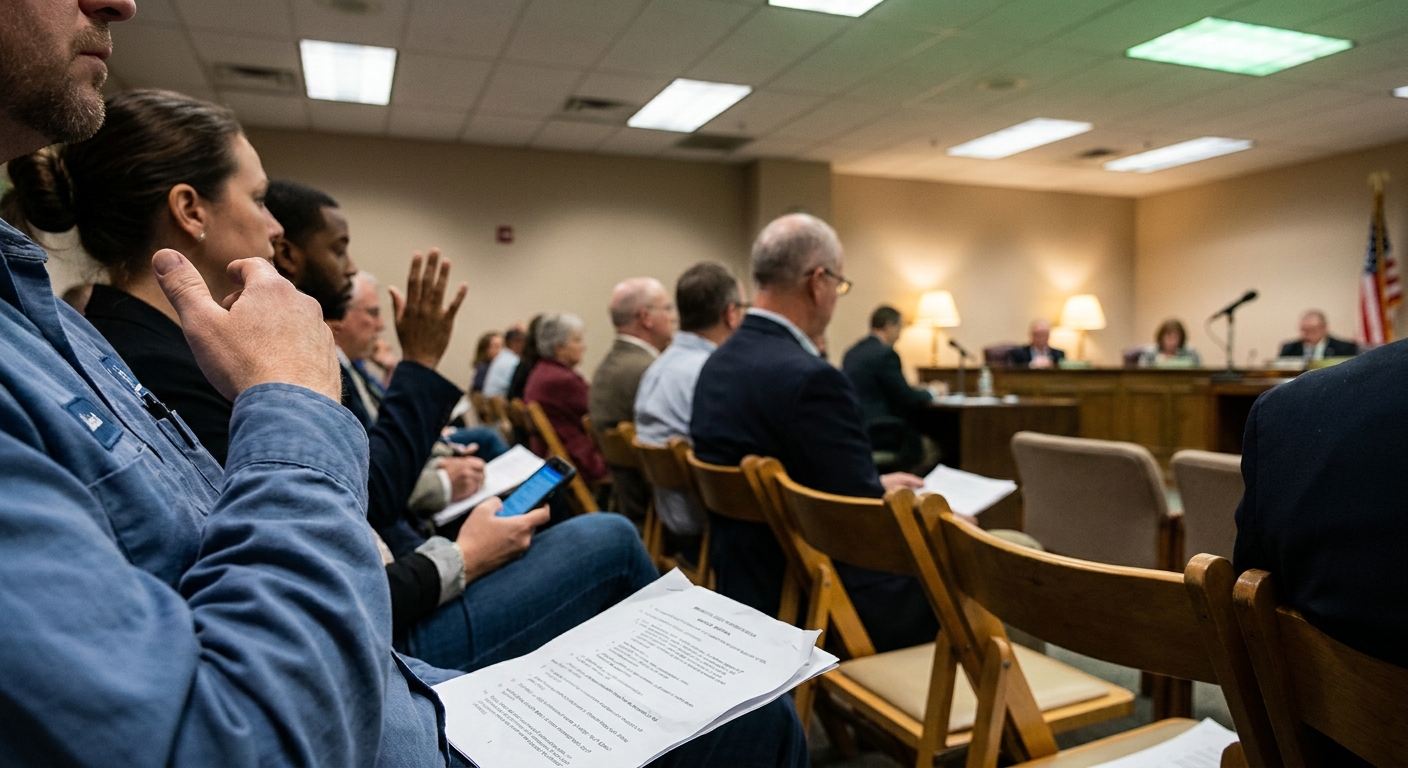
For Ann Arbor renters waiting for protections, residents watching city services, and taxpayers looking for follow-through, City Council's midsummer work presents a clear divide: a roughly $650 million FY 2027 budget and several development initiatives are moving ahead, while anti-displacement safeguards, labor costs, bike-lane funding, and a major police-data contract remain unresolved.
Council approved the FY 2027 budget on May 18, 2026, with money directed toward public safety, climate action, housing, transportation, human services, planning, and economic development. The final budget supports 894 full-time-equivalent positions, including 30 new staff members, with major support for the Sustainable Energy Utility, tens of millions for road improvements, about $15.7 million for social services, and $1.35 million for an unarmed crisis-response program. Council also approved $700,000 for the Rising Hope for Housing program from marijuana excise tax and opioid settlement funds and $500,000 from the Climate Action millage for local electric vehicle rebates.
For residents squeezed by rising rents and scarce affordable options, the clearest housing action is happening through financing and development approvals.
The Ann Arbor Housing Commission and Ann Arbor Housing Development Corporation are acquiring the Avia Lofts complex at 800 Victors Way to convert all 114 existing apartments into dedicated affordable housing. Council approved a $1.2 million grant from the Affordable Housing Fund toward the roughly $19.5 million project, which will use tax-exempt bond financing and set income limits so that all units are affordable to households at or below 80 percent of area median income, with deeper affordability targets for many units.
A much larger downtown project at 350 South Fifth Avenue has secured significant state backing. The Michigan Strategic Fund approved a Transformational Brownfield Plan providing $29.98 million in tax capture incentives for the 20-story, 330-unit affordable housing high-rise, which carries total project costs of $209.4 million and is expected to be completed by the end of 2028. EGLE awarded a $1 million Brownfield Redevelopment Grant for the project, which will price all units at no more than 80 percent of area median income, including 110 units reserved for families making up to 30 percent AMI.
Council has also acknowledged that new housing can displace the people it is meant to help. On June 15, 2026, it passed Resolution 26-1053 with a 9-1 vote, directing City Administrator Milton Dohoney Jr. to create a comprehensive anti-displacement plan in response to the city's newly approved Comprehensive Land Use Plan. Sponsored by Council Member Cynthia Harrison, 1st Ward, the resolution requires a report within 90 days—due approximately September 13, 2026—covering a definition of displacement for both housing and businesses, best practices from peer cities, a timeline for developing the full plan, and recommendations for a consultant and associated costs.
For renters and small businesses, that is the difference between a stated concern and an enforceable safeguard.
Climate and building-efficiency work is moving faster. Council approved tripling annual funding for the Office of Sustainability and Innovations' Sustaining Ann Arbor Together grant program to $300,000, expanding eligibility to support building decarbonization by local nonprofits and houses of worship. Council approved a $400,000 weatherization agreement tied to Bryant Neighborhood decarbonization at its July 6, 2026, meeting.
Ann Arbor's Sustainable Energy Utility has moved from planning into implementation, with the first rooftop solar and battery storage systems installed on two homes in the Bryant neighborhood on May 18, 2026, as part of a grant-supported pilot. Around 100 Bryant neighborhood homes are scheduled to receive installations before the pilot wraps up later in 2026, after which the program is expected to expand beyond Bryant starting in 2027.
Several land-use measures are moving, but residents still have an opening to shape them before they become law. On July 6, 2026, City Council approved at first reading Ordinance 26-01, amending Unified Development Code Section 5.19 to reorganize bicycle and vehicle parking standards, update bike-parking requirements, and clarify design and location rules for bicycle facilities. The ordinance maintains existing downtown residential bicycle-parking levels but changes how they are measured, and requires at least 5 percent of all required bicycle spaces to be oversized, with a minimum of two per class. It advances toward a future public hearing and second-reading vote.
Council also approved at first reading on July 6, 2026, the rezoning of seven parcels on West Huron and South First for a 10-story building, which requires a future public hearing and second reading for final approval.
Other decisions have already been placed before voters or set into policy. Council voted to place two city charter amendments on the November 2026 ballot: one changing how the city clerk treats signatures that appear on multiple nominating petitions, and another shifting the start date for newly elected officials to the first Monday of the month following the regular city election.
On July 6, 2026, Council unanimously approved a resolution directing the police department to renew training on distinguishing hate crimes, discrimination, and First Amendment activity, and establishing timelines for responding to religious groups' security requests. Council also passed an ordinance restricting oak tree pruning to prevent oak wilt.
The unresolved part of the summer agenda is where daily services, labor costs, and public accountability meet. Certain bike lane projects are currently paused due to unresolved funding questions. Council removed a $2.97 million contract for police data collection and storage from the agenda ahead of the July 6, 2026, meeting, preventing any vote or discussion on the item. The City of Ann Arbor and the AFSCME union continue negotiating unresolved economic issues, including compensation, longevity, shift premiums, and retirement, as of June–July 2026. Council, on June 15, 2026, approved an amended development agreement for the Southtown project, which remains complicated by the developer's bankruptcy and requires ongoing oversight.
Residents will have several checkpoints before fall. Ann Arbor City Council's regular meetings are scheduled at 7 p.m. on the first and third Monday of each month in Council Chambers at City Hall. For August 2026, the only regular meeting is scheduled for August 17, 2026, as there is no meeting on August 3 due to the August 4 primary election.
The Ann Arbor for Public Power campaign is collecting signatures for a proposed charter amendment aiming to qualify for the November 3 ballot. The measure would establish a municipal electric utility overseen by a nine-member board, with five ward-based members elected by voters and four appointed by the mayor and confirmed by council, starting in November 2028.
Whether the budget's appropriations become reliable services and protections—or remain broad commitments beside unresolved costs and contracts—will shape the city's agenda well beyond the summer recess.