Arts & Culture
Neutral Zone Youth Musicians Take Center Stage at Art Fair
By Staff · July 24, 2026
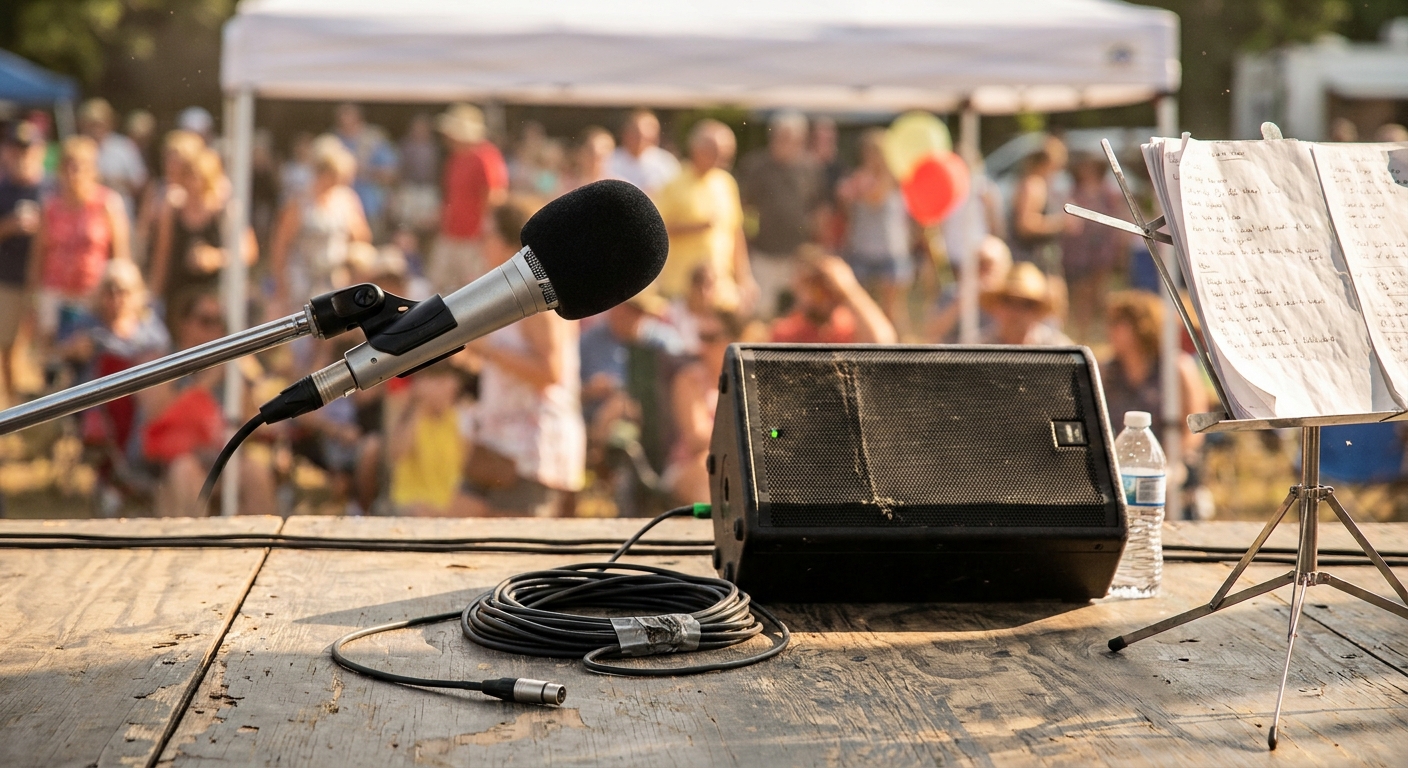
For seven hours Friday, July 17, the Neutral Zone programmed the WEMU Stage at the Ann Arbor Art Fair, placing 10 young musicians in the flow of the city's largest summer arts event. The free, all-ages program ran from 10 a.m. to 5 p.m. as crowds navigated roughly 30 downtown blocks during an event expected to draw more than 400,000 visitors over three days.
The youth-driven teen center's takeover amounted to a quiet assertion about who gets visibility in Ann Arbor's most prominent public spaces. Founded in 1998, the Neutral Zone secured prime cultural real estate during the city's marquee summer event rather than tucking its youth concert apart from the fair—putting young artists who aren't on elite conservatory tracks before some of the weekend's largest audiences.
The WEMU Stage sits in the parking lot next to Palio restaurant at Main and William, a high-visibility location amid the Art Fair's nearly 1,000 jury-selected artists. The 2026 Ann Arbor Art Fair ran from Thursday, July 16, through Saturday, July 18, with hours of 10 a.m. to 9 p.m. Thursday and Friday and 10 a.m. to 8 p.m. Saturday.
Margo Solomon opened Friday's youth program at 10 a.m., followed by Tristan Taylor, Eshtrios, Penelope Koss, Heaven, CarThaArtist, Taneesh, The Caravans, Almost, and BHTM Line, which closed the showcase.
WEMU 89.1 sponsors the Stage on Main, while The Ark programmed evening sets featuring acts such as Schmaltz, the Jill Jack Band, The Rupple Brothers, Bobby Alu, and Brain Plasticity Ukulele Collective with Blueshouse. WEMU joined the Art Fair stage partnership within the last couple of years, but the underlying stage location in the Palio parking lot has existed for about a decade as part of The Ark's 50th-anniversary expansion. That history makes the Neutral Zone's daytime hold on the stage notable: a youth center programming a WEMU-sponsored venue where The Ark runs evening sets points to institutional partnerships that prioritize youth visibility.
The Art Fair appearance extended work the Neutral Zone has pursued since its creation by teens, parents, and community supporters to provide a safe space and opportunities for local high school students. Its origins trace to a 1995 youth survey by the Ann Arbor Area Community Foundation's Youth Council that identified the need for a teen center. The organization's mission is to help young people embrace their power, ignite creativity, and build equity, justice, and collective liberation. It offers programming in music, visual arts, literary arts, performance, and social justice, along with leadership and community-building opportunities. Its performance programs include concerts, a concert venue, open mics, poetry slams, and opportunities for participants in its music and hip-hop programs to perform original music or rhymes.
Much of that work takes place at the B-Side, the Neutral Zone's all-ages concert venue at 310 E. Washington St., which regularly hosts local teen bands, adult musicians, touring acts, open jams, poetry slams, and dance parties. Access to performance is rarely built through one high-profile booking; it comes through repeated chances to be heard, try material in public, and find an audience beyond a familiar circle.
In 2026, those chances included Soul Synthesis, a free youth hip-hop concert held April 25 at the B-Side featuring teen talent from across southeast Michigan. The City of Ann Arbor's Party in the Parks summer concert series also included a May 30 Teen Music Showcase at West Park featuring all teen artists from the Neutral Zone.
Together, the B-Side hip-hop showcase, Party in the Parks, and the Art Fair stage reflect consistent infrastructure-building rather than one-off gestures. Executive Director Lori Roddy leads the Neutral Zone's platform-building work for youth artists. Whether Ann Arbor's commitment to youth cultural development extends beyond visible events to sustained institutional support and pathways for young artists remains an open civic question.